
Typically, traditional houses have The houses are built with that remarkable scale-looking rooftop, wooden walls with a thin paper-designed sliding doors and large stone footpath leading to the front door. Aside from that, the ancient or traditional Japanese house is also another possibility. Kanji are the characters that came from China which are also used in the modern Japanese art of writing. Both of these styles of writing descended from Kanji.
The cursive way of writing is Hiragana, which is most popular among women, and the simpler type is Katakana. Japanese writing is in two forms, Hiragana and Katakana. If you prefer a simple but striking Japanese tattoo, a Kanji character is just right. Continue reading and know more about the Japanese tattoo perfect for you.
 Well, if this is your first research in choosing a Japanese tattoo then you have to read all your researches carefully so you could choose the right tattoo for you. Don't know exactly what these things are? Popular designs like that of the typical Japanese house during the Meiji era, faces of some excellent representations of samurais, the ever famous "Sakura" flower, dragons and fire with a Kanji symbols with them are still in style. You can actually choose from the Japanese characters or the symbols with certain meanings. Having the unique and awesome type of art, Japanese tattoos are widely admired and seen as a flexible tattoo design. Japanese Tattoo If you live in the western part of the world, I am sure you are fascinated with the Japanese culture from the east.
The cursive way of writing is Hiragana, which is most popular among women, and the simpler type is Katakana. Japanese writing is in two forms, Hiragana and Katakana. If you prefer a simple but striking Japanese tattoo, a Kanji character is just right. Continue reading and know more about the Japanese tattoo perfect for you.
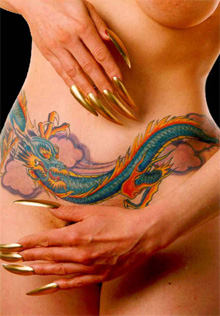 Well, if this is your first research in choosing a Japanese tattoo then you have to read all your researches carefully so you could choose the right tattoo for you. Don't know exactly what these things are? Popular designs like that of the typical Japanese house during the Meiji era, faces of some excellent representations of samurais, the ever famous "Sakura" flower, dragons and fire with a Kanji symbols with them are still in style. You can actually choose from the Japanese characters or the symbols with certain meanings. Having the unique and awesome type of art, Japanese tattoos are widely admired and seen as a flexible tattoo design. Japanese Tattoo If you live in the western part of the world, I am sure you are fascinated with the Japanese culture from the east.


